Usually not. In 2026 the most you can receive at 65 is $1,507.65 a month from CPP and $762.50 from OAS, about $27,200 a year combined, and most people get less than the maximum CPP. To keep your lifestyle, plan to fill the gap with your own savings.
Retirement·6 min read·By Money Simple·Updated November 17, 2026
🏖️
What are CPP and OAS meant to do?
CPP is funded by the contributions you and your employer make while you work. The government invests that money conservatively and pays it back to you as a monthly pension in retirement. It's reliable, but it was never designed to be large.
OAS is paid by the government from general tax revenue, so you don't contribute to it directly. It depends mainly on how long you've lived in Canada after age 18.
Both programs are meant to be a base to build on, not a complete retirement plan.
CPP maximum at 65$1,507.65/month2026 rate. Most people get less.
OAS at 65–74$762.50/month2026 rate, rising 10% at 75.
How much will you need after you retire?
The biggest thing working against your retirement income is inflation: the slow loss of what each dollar can buy. Even modest inflation adds up over the decades you'll be retired.
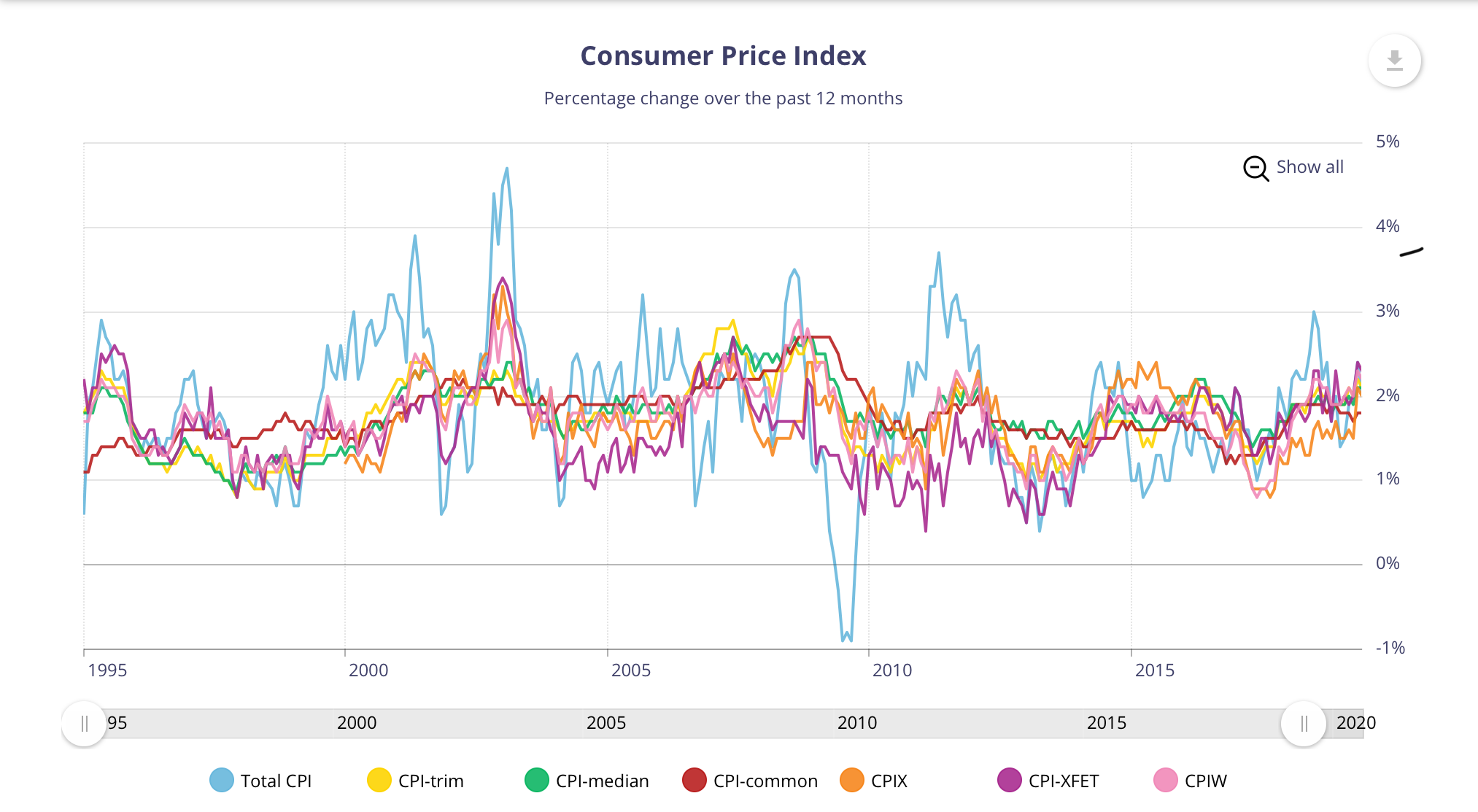
Using Bank of Canada data, a basket of goods that cost $1,000 in 1995 cost about $1,562 twenty-five years later, at average inflation of roughly 1.8% a year. Apply the same rate forward and $5,000 of monthly household spending today becomes about $7,810 a month in 25 years.
Consumer price index over time
How do I find my retirement income gap?
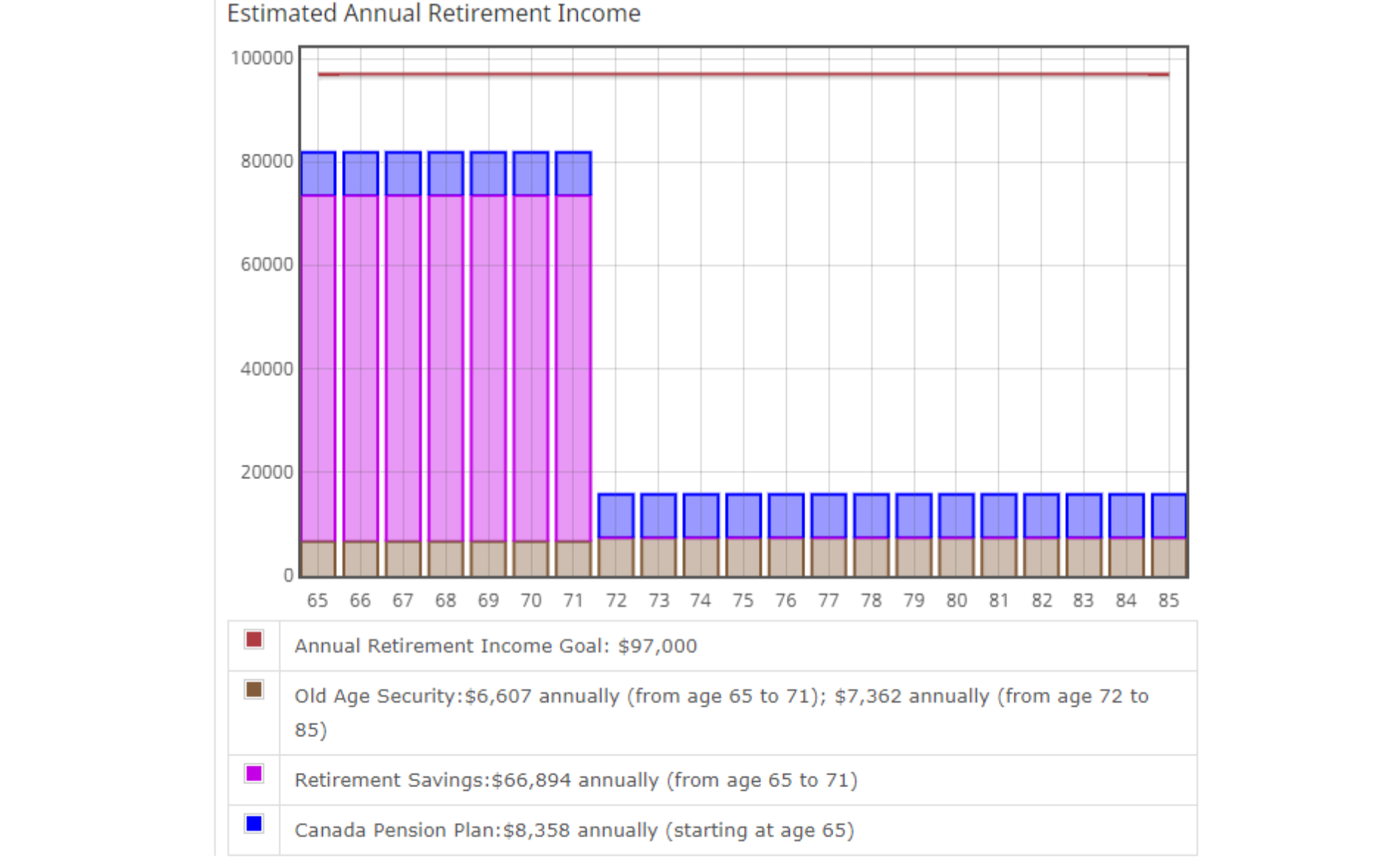
Your income gap is the difference between the income you'll want in retirement and what you'll receive from CPP, OAS and any workplace pension. Personal savings have to cover that difference, and for longer than many people expect: plan for a retirement of 20 to 30 years.
Example estimate of annual retirement income and the income gap
There's no single right answer. The best mix depends on your timeline, taxes and comfort with risk:
Bank deposits and GICs are safe, but their returns have often struggled to keep up with inflation, so your money can lose buying power.
Stocks have historically grown faster than inflation over long periods, but they rise and fall along the way and don't suit everyone.
Universal life insurance combines life coverage with an investment account that can hold market-linked funds and grow tax-deferred, similar to an RRSP.
Segregated funds (which can be held in an RRSP or TFSA) are long-term investments offered by insurers that guarantee a portion of your principal at maturity or on death.
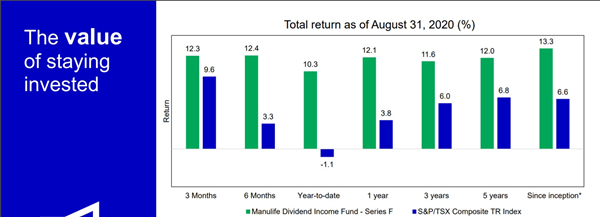
Staying invested over the long term
What matters most is time. Investing steadily over 20 to 40 years gives compounding room to work, which is why the best time to start closing your income gap is now.
CPP and OAS amounts are 2026 rates and change every year. Check your own CPP estimate in your My Service Canada Account. Inflation figures are based on historical Bank of Canada data and are not a forecast.