Get a slice of the cake: are you an owner or a consumer?
Owning shares, directly or through mutual funds, lets you share in the profits of the companies you buy from every day. Diversifying across many companies and staying invested for the long term are the two best ways to manage the risk.
Investing·4 min read·By Money Simple·Updated November 17, 2026
🍰
Become an owner
When you buy a company's common shares, you own a small piece of that business. As an owner you can benefit in two ways: through dividends, when the company pays out part of its profit, and through growth, when the value of the business, and your shares, goes up.
Why are stocks seen as risky?
Share prices move for many reasons: how well the business performs, changes in technology, competition, interest rates, and political and economic events. Some of those you can predict. Many you can't.
How do I lower the risk? Diversify
Diversification simply means not putting all your eggs in one basket. Spreading your money across many companies and industries means one bad outcome can't sink your whole portfolio.
BlackBerry shares traded above $200 in 2007. A few years later they were below $20. Investors who held only that one stock lost most of their money; investors spread across many companies barely felt it.
Not enough money to diversify? Use a fund
Buying shares in dozens of companies yourself takes a lot of money. Mutual funds solve that: they pool money from many investors to buy a wide range of stocks across different sectors.
A professional fund manager chooses and trades the holdings for you.
You earn returns from dividends and from the rising value of your fund units.
You can start with small monthly amounts.
The time-tested approach: patience
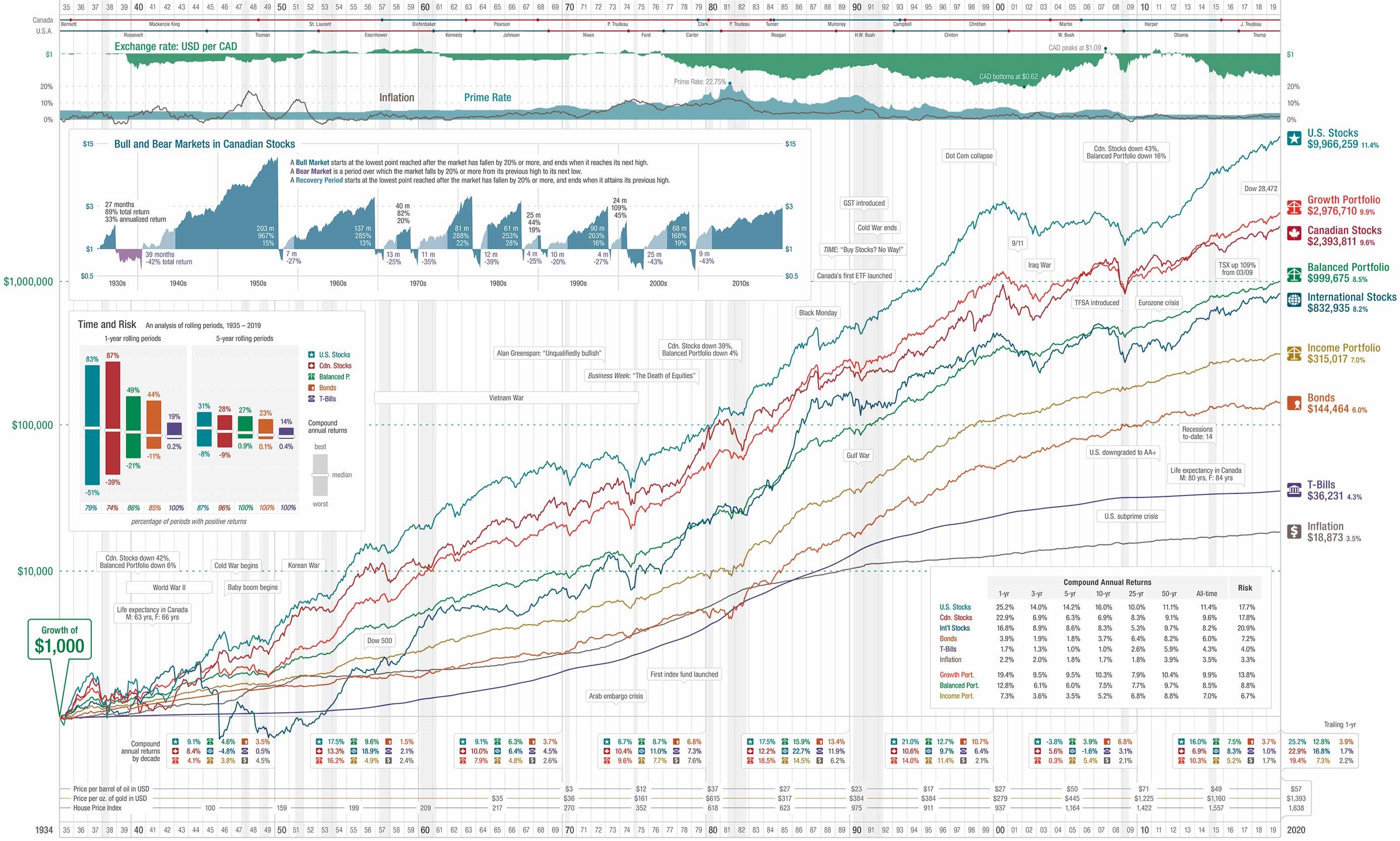
Markets react to elections, global events and economic cycles, and none of that is in your control. What you can control is how long you stay invested. Historically, markets have recovered from every recession and gone on to new highs, which is why a long-term view usually matters more than picking the perfect moment.
Historical market recoveries after downturns
Investing in stocks and mutual funds involves risk, including the loss of money. Past performance does not guarantee future results. Mutual funds have fees that reduce returns, so compare them before you invest.